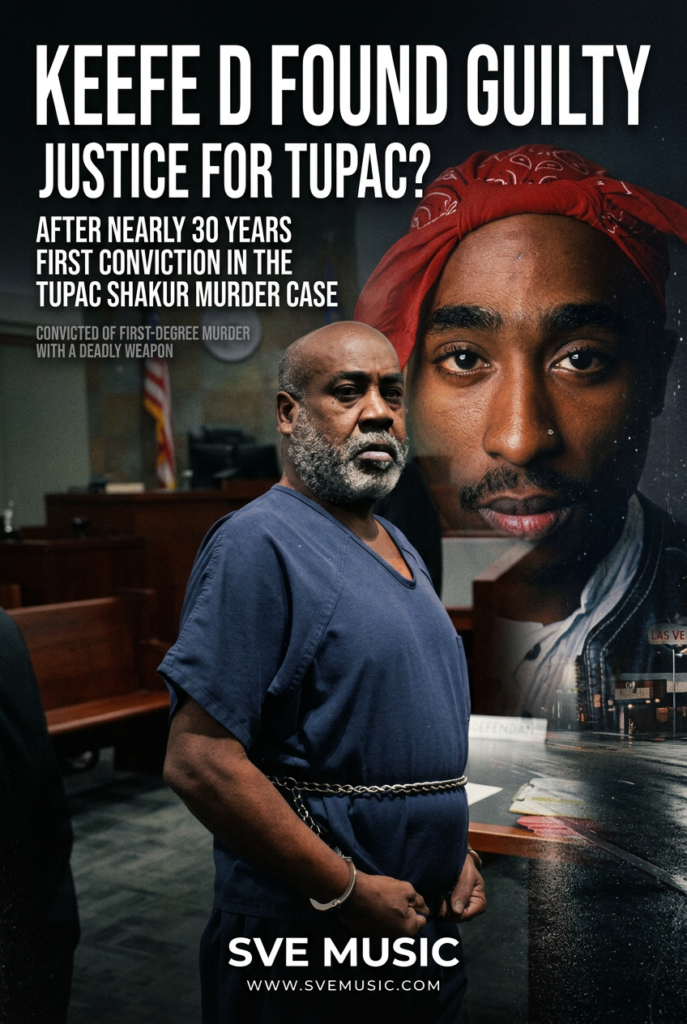
KEFFE D FOUND GUILTY: AFTER 30 YEARS, JUSTICE FOR TUPAC SHAKUR
By SVE Music | 1 September 2026
Nearly 30 years after the murder of one of hip-hop’s most influential artists, a Las Vegas jury has found Duane “Keffe D” Davis guilty of first-degree murder with a deadly weapon in connection with the 1996 killing of Tupac Shakur.
The verdict, delivered on 31 August 2026, brings the long-running Tupac murder case to a historic point: Davis is the first person to be convicted in connection with Shakur’s killing.
The 63-year-old former South Side Compton Crips figure was accused by prosecutors of helping organise the drive-by attack that killed Tupac in Las Vegas. Davis was not accused of being the gunman. Prosecutors argued that he organised the attack, obtained the firearm and participated in the events that led to the shooting.
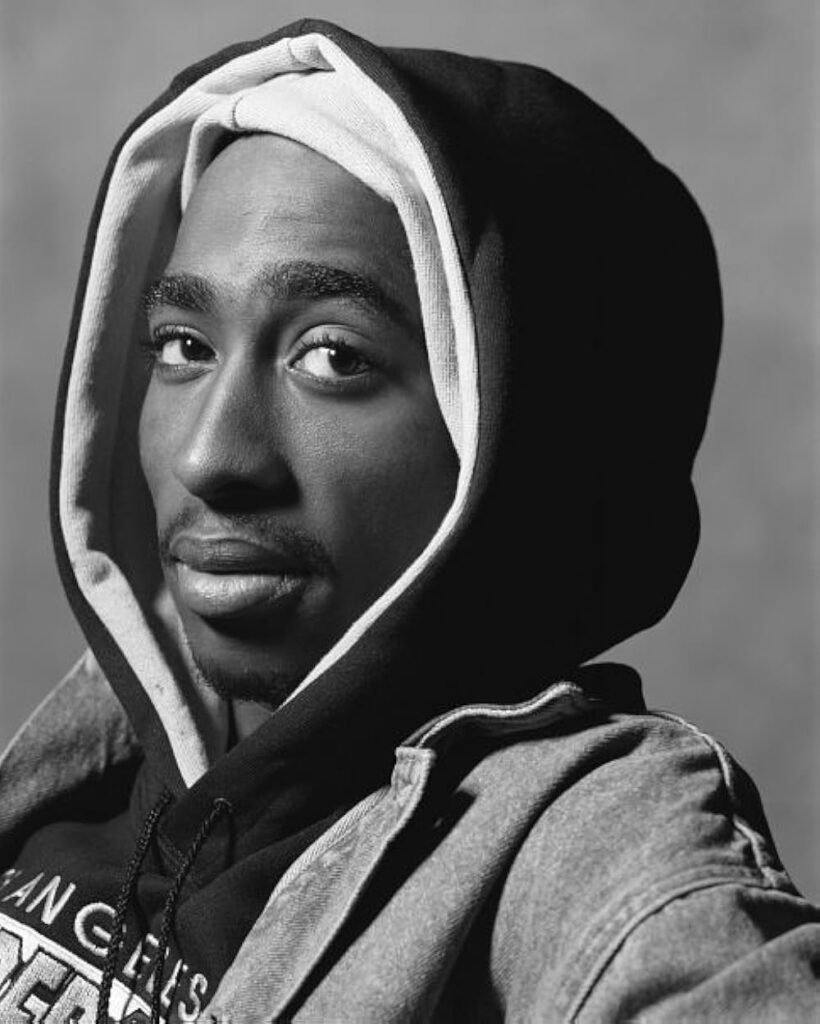
THE NIGHT TUPAC WAS SHOT
On 7 September 1996, Tupac Shakur was travelling through Las Vegas in a BMW driven by Death Row Records co-founder Marion “Suge” Knight.
Earlier that evening, Tupac, Knight and members of their entourage had been involved in a confrontation with Orlando “Baby Lane” Anderson inside the MGM Grand following the Mike Tyson–Bruce Seldon heavyweight boxing match.
Anderson was Davis’s nephew.
According to prosecutors, the confrontation became the motive for the later attack.
That night, while Tupac and Knight were stopped at a red light near the Las Vegas Strip, a white Cadillac pulled alongside their BMW and gunfire erupted.
Tupac was struck several times.
Knight was also injured but survived.
Tupac was taken to hospital and died six days later, on 13 September 1996, aged 25.
WHAT DID THE PROSECUTION SAY KEFFE D DID?
The prosecution’s case was not that Davis personally fired the fatal shots.
Instead, prosecutors argued that Davis was the organiser behind the attack.
Chief Deputy District Attorney Binu Palal told jurors that Davis acquired a firearm, gathered the group together and went looking for Tupac and Knight after the earlier confrontation.
Prosecutors argued that Davis’s role made him legally responsible for the murder even though the person who actually fired the shots was never identified at trial.
The prosecution relied heavily on Davis’s own words over a period of years.
Those included interviews, recordings and statements about the shooting, as well as his 2019 memoir, Compton Street Legend.
Prosecutors argued that Davis repeatedly described his involvement and therefore provided powerful evidence against himself.
THE 2019 MEMOIR
One of the most important pieces of evidence was Davis’s 2019 memoir, Compton Street Legend.
Davis had publicly discussed his knowledge of the shooting for years, and his statements became increasingly important to investigators as the case was reopened.
The prosecution presented his public statements and recordings as evidence that he knew what happened and had played an active role in organising the attack.
The defence, however, strongly disputed this interpretation.
Davis’s attorney Michael Sanft argued that Davis had exaggerated or fabricated elements of his stories for money, publicity and protection.
The defence specifically challenged the idea that the memoir should be treated as a straightforward confession, arguing that parts of the book were fictionalised.
That argument ultimately failed to convince the jury.
WHAT ABOUT ORLANDO ANDERSON?
This is an important distinction.
Orlando “Baby Lane” Anderson was never convicted or charged with Tupac’s murder.
Anderson had been identified over the years as a possible suspect and was alleged by prosecutors to have been involved in the shooting.
However, he was never prosecuted for Tupac’s killing.
Anderson died in 1998, approximately two years after Shakur’s murder, meaning he could never face trial.
Consequently, it would be inaccurate to state as a fact that Anderson was the shooter.
The identity of the person who actually fired the fatal shots was not established through a criminal conviction.
What has now been established in court is that a jury found Davis legally responsible for first-degree murder based on his role in the killing.
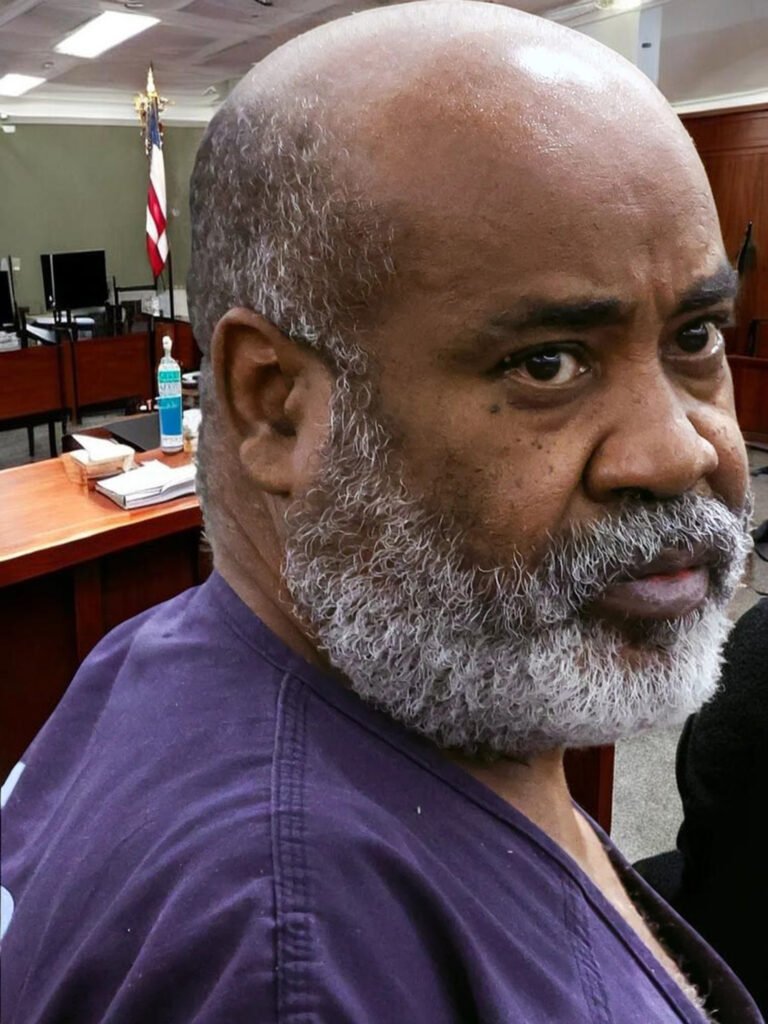
THE DEFENCE FIGHT
Davis pleaded not guilty.
His defence attempted to undermine the prosecution’s case by challenging the reliability of his previous statements.
His lawyer argued that Davis had told different versions of events over the years and that his stories could not be independently corroborated.
The defence also questioned the police investigation, including claims concerning missing evidence and the handling of the case over the years.
But after an 11-day trial, the jury rejected the defence’s arguments.
Jurors deliberated for less than three hours before returning the guilty verdict.
A HISTORIC CONVICTION
The verdict represents a major development in one of the most famous unsolved murder cases in music history.
For nearly three decades, Tupac’s murder generated countless theories, accusations and unanswered questions.
Despite the enormous public interest surrounding the case, nobody had previously been convicted of killing him.
That changed on 31 August 2026.
Davis is now officially a convicted murderer in the Tupac Shakur case.
However, the verdict does not mean every mystery surrounding the shooting has been answered.
The trial established Davis’s criminal responsibility, but it did not result in a conviction of the person who actually fired the gun.
WHAT HAPPENS NEXT?
Davis is facing a potential life sentence without the possibility of parole.
His sentencing is currently scheduled for 13 October 2026.
Following the verdict, Davis indicated that he intends to appeal his conviction.
That means the legal story is not necessarily finished.
TUPAC’S LEGACY LIVES ON
Tupac Amaru Shakur was only 25 years old when his life was cut short.
Yet three decades later, his influence remains enormous.
From All Eyez on Me and Me Against the World to songs such as “California Love,” “Changes” and “Dear Mama,” Tupac’s music continues to reach new generations.
His influence extends beyond hip-hop into film, fashion, politics, social commentary and popular culture.
His death also became one of the defining moments of the violent period surrounding the East Coast–West Coast rap rivalry of the 1990s.
For millions of fans, however, Tupac was never simply a symbol of that rivalry.
He was an artist who spoke about poverty, racism, family, violence, ambition, love, struggle and survival.
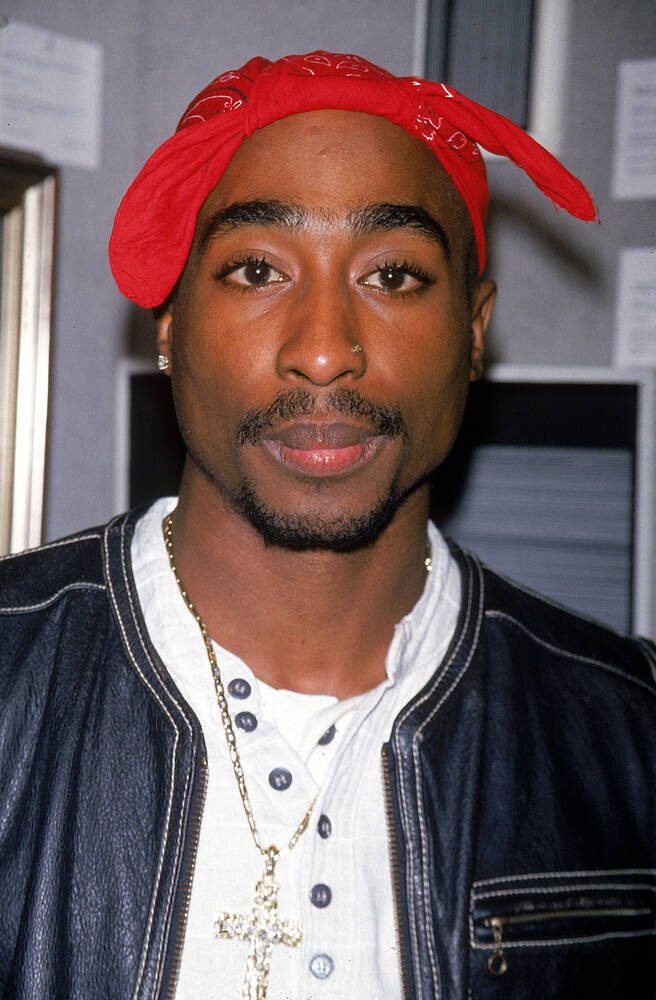
30 YEARS LATER — A CHAPTER CLOSES
The conviction of Duane “Keffe D” Davis does not bring Tupac back.
It does, however, mark the biggest legal development in his murder case since the night he was shot in Las Vegas in 1996.
After almost 30 years of speculation, investigations and unanswered questions, a jury has now determined that Davis was criminally responsible for Tupac Shakur’s murder.
The sentence is still to come.
The appeal is still to come.
And some questions surrounding the shooting may never be fully answered.
But for Tupac’s family, friends and millions of fans around the world, 31 August 2026 will forever be remembered as the day the Tupac murder case finally produced a guilty verdict.
Tupac Shakur — 1971–1996.
Forever 2Pac.