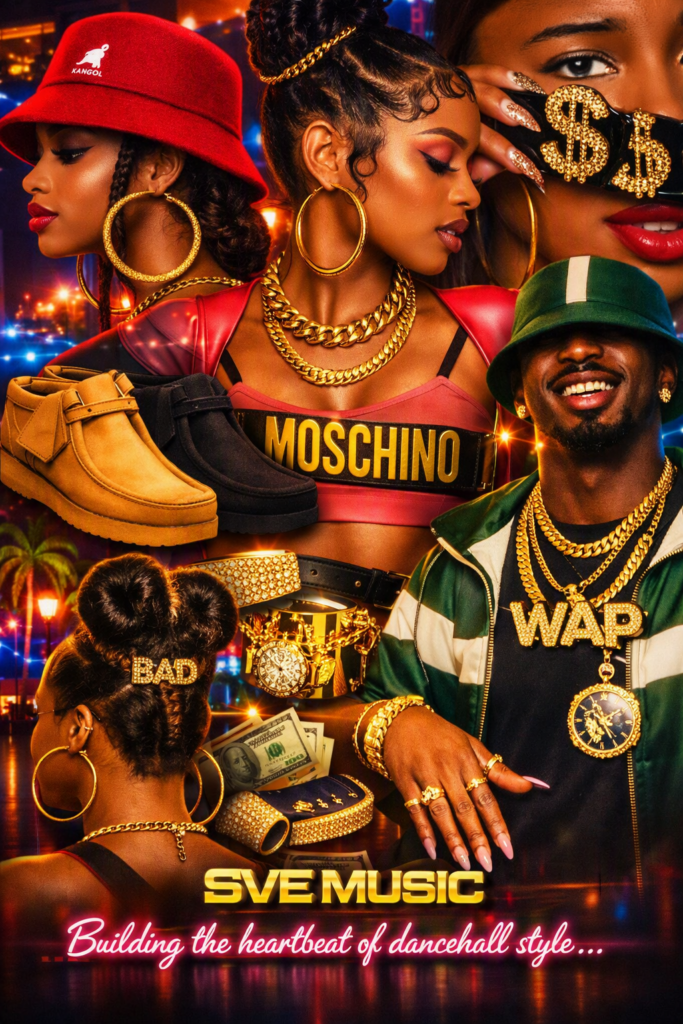
By SVE Music
Dancehall fashion isn’t just clothing — it’s communication. It’s how Jamaicans express status, identity, rebellion, movement, and global influence. From Kingston sound‑system yards to international runways, dancehall style has shaped generations and crossed borders. Here’s how it evolved into one of the world’s most distinctive fashion cultures.
Status: Clarks, Wallabees & Designer Belts
Dancehall fashion has always been tied to status — the idea of looking “clean,” “sharp,” and “proper,” even in the roughest environments.
Clarks & Wallabees
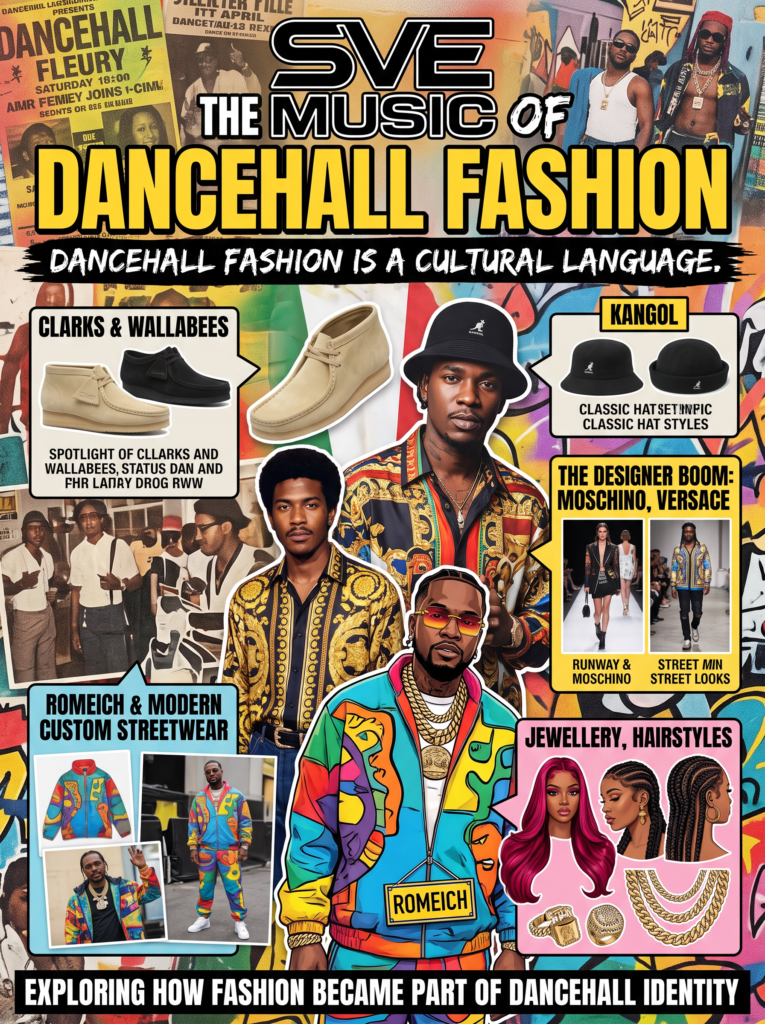
Clarks became the unofficial badge of respectability in Jamaican street culture. Clean crepe soles meant discipline, pride, and a certain kind of swagger. Wallabees added a luxury twist — soft suede, uptown flavour, and a timeless silhouette that dancers and artists embraced.
Designer Belts: Moschino & Versace
By the 1990s, dancehall stepped into the luxury era. Moschino belts, Versace prints, and bold gold logos became symbols of success. Artists like Shabba Ranks and Patra turned designer fashion into dancehall staples, merging European high fashion with Jamaican attitude.
Identity: Hair, Hats & Silhouettes
Dancehall fashion is deeply tied to identity — who you are, where you’re from, and how you move.
Kangol Hats
Kangol hats carried the rude‑boy aesthetic from the UK straight into Jamaican dancehall. Worn tilted, low, or paired with sharp tailoring, Kangol became a symbol of confidence and street authority.
Hairstyles
Dancehall hairstyles are cultural statements:
Patra braids
Shabba’s high‑top fade
Elephant Man’s neon colours
Spice’s theatrical wigs
Shenseea’s modern neon looks
Hair in dancehall is identity, rebellion, and performance all at once.
Silhouettes
Dancehall silhouettes evolved with the music:
80s: tailored trousers, marina mesh vests
90s: oversized prints, leather outfits
2000s: baggy jeans, tall tees
2010s–2020s: slim‑fit designer streetwear
Each silhouette marks a shift in the culture.
Rebellion: Loud Colours & Oversized Shapes
Dancehall fashion has always been rebellious — loud colours, bold prints, oversized shapes, and fearless combinations.
From Elephant Man’s neon outfits to the wild prints of 90s Moschino, dancehall style rejects subtlety. It’s about being seen, being heard, and being unforgettable.
This rebellion is part of the music itself — a visual extension of dancehall’s defiant energy.
Movement: Clothes Built for Dancing
Dancehall is movement. Fashion follows the body.
Dancers and crews shaped entire trends:
Comfortable denim for choreography
Flexible streetwear for routines
Breathable tops for heat and sweat
Accessories that move with rhythm
Romeich streetwear and modern custom designers continue this tradition — creating outfits that look good and move well.
Global Influence: From Kingston to the World
Dancehall fashion has influenced:
Hip‑hop
Afrobeats
Pop culture
Runway fashion
Streetwear brands
Celebrity styling
Rihanna, Beyoncé, Drake, and countless designers have pulled from dancehall aesthetics — from Clarks to neon wigs to bold prints.
Dancehall fashion is now a global visual language.
How Fashion Became Part of Dancehall Identity
Dancehall fashion became identity because:
Music and style evolved together
Artists used clothing to express status and story
Dancers needed functional, expressive outfits
Street culture shaped the aesthetic
Global influences merged with Jamaican creativity
Fashion in dancehall is not decoration — it’s narrative. It tells you who someone is before they speak. It’s a badge of pride, a symbol of struggle, and a celebration of culture.